You hold the idea.
We build the proof.
An idea is a beginning; evidence is a decision. We are the Zürich studio that takes the questions your roadmap keeps deferring and answers them in something you can hold, run, and trust — in days rather than quarters.
A small studio with the instincts of a lab and the pace of a workshop.
Papaia began among engineers and builders who came of age inside the ETH Zürich ecosystem — one of the densest gatherings of technical talent anywhere on earth. We left the safety of the lab not to write papers about what might be possible, but to prove it on the bench, in code, and in the hands of the people who would use it.
What holds us together is a conviction that the hardest product questions are not solved by another workshop or a thicker deck. They are solved by people willing to get their hands on the problem — to design, fabricate, write, and measure until uncertainty turns into something concrete.
We are deliberately small. There are no account layers, no hand-offs to a delivery team you never met. The engineers who sit across from you in the first conversation are the same ones who design the architecture, solder the board, and run the test. That continuity is not a convenience; it is how good work stays honest.
Small enough to move at the speed of a startup, rigorous enough to be trusted with serious engineering — that is the balance we were built to hold.
Quick
We keep the pace of a studio, not the cadence of a committee.
Technical
Genuine engineering depth — the kind that survives contact with reality.
Imaginative
We are drawn to the problems most teams quietly route around.
Hands-on
We build it, we test it, and we tell you what we found.
We close the distance between an idea and the evidence it deserves.
Every engagement is shaped to end the same way — with something real in your hands rather than a theory in a report. We frame the question, build the most promising answer, and put it under pressure until we know what is true.
We frame.
A fuzzy ambition becomes a sharp, buildable problem — and a short list of directions genuinely worth chasing.
We build.
Hardware, software, or the awkward place between them: we make the strongest direction into something you can pick up and try.
We prove.
We test it against users, performance, and constraints — then tell you plainly what held up and what did not.
A challenge goes in. Evidence comes out.
No drawn-out discovery, no theory left untested. Each of the five stages leaves something tangible behind, so progress is always visible — and never just a slide.
Frame the challenge
Together we cut through the noise and name the real problem — quickly, and without ceremony.
A sharp problem statementExplore the concepts
We generate credible directions and stress their feasibility before anyone commits.
Ranked concepts and pathsBuild the prototype
We take the most promising idea and make it real — properly, not as a mock-up.
A working prototypeGather the evidence
We measure it against reality and report what is genuinely true, surprises included.
Test results and a verdictSet the direction
You leave with a confident next move: build it, scale it, or change course early.
A roadmap and recommendationSix formats, one purpose — moving you forward.
From a single focused sprint to a standing innovation partnership, choose the shape that fits the challenge in front of you. Each one ends with proof, not paperwork.
Innovation Sprint
A tightly bounded effort that turns an open question into a concrete, defensible direction in a matter of days.
When you need momentum, nowRapid Prototyping
We convert "perhaps" into "look at this" — a functioning prototype you can demonstrate, test, and decide upon.
When you need to see it workFeasibility & Concept Development
A clear-eyed technical answer to whether something can be built, and how, before a budget is ever committed.
When money is on the lineProduct Reinvention
We rethink what an ageing product could become — technically and conceptually — and prototype the version that earns its future.
When it is losing groundEngineering Development
Senior engineering capacity to design and build the real system — or to take on the part that is genuinely hard.
When you have the directionInnovation Partnership
A standing strike team on call — your external R&D capacity for whatever comes next, quarter after quarter.
When innovation never stopsThe people who scope your challenge are the ones who solve it.
No account managers, no quiet hand-offs. Papaia is a close-knit group of ETH-trained engineers and builders — and these are the faces you will actually work with.

Jeremia Geiger
Raised inside two industrial family businesses, Jeremia leads ambitious multidisciplinary teams across product design, software, and data science — turning industrial complexity into forward motion.
LinkedIn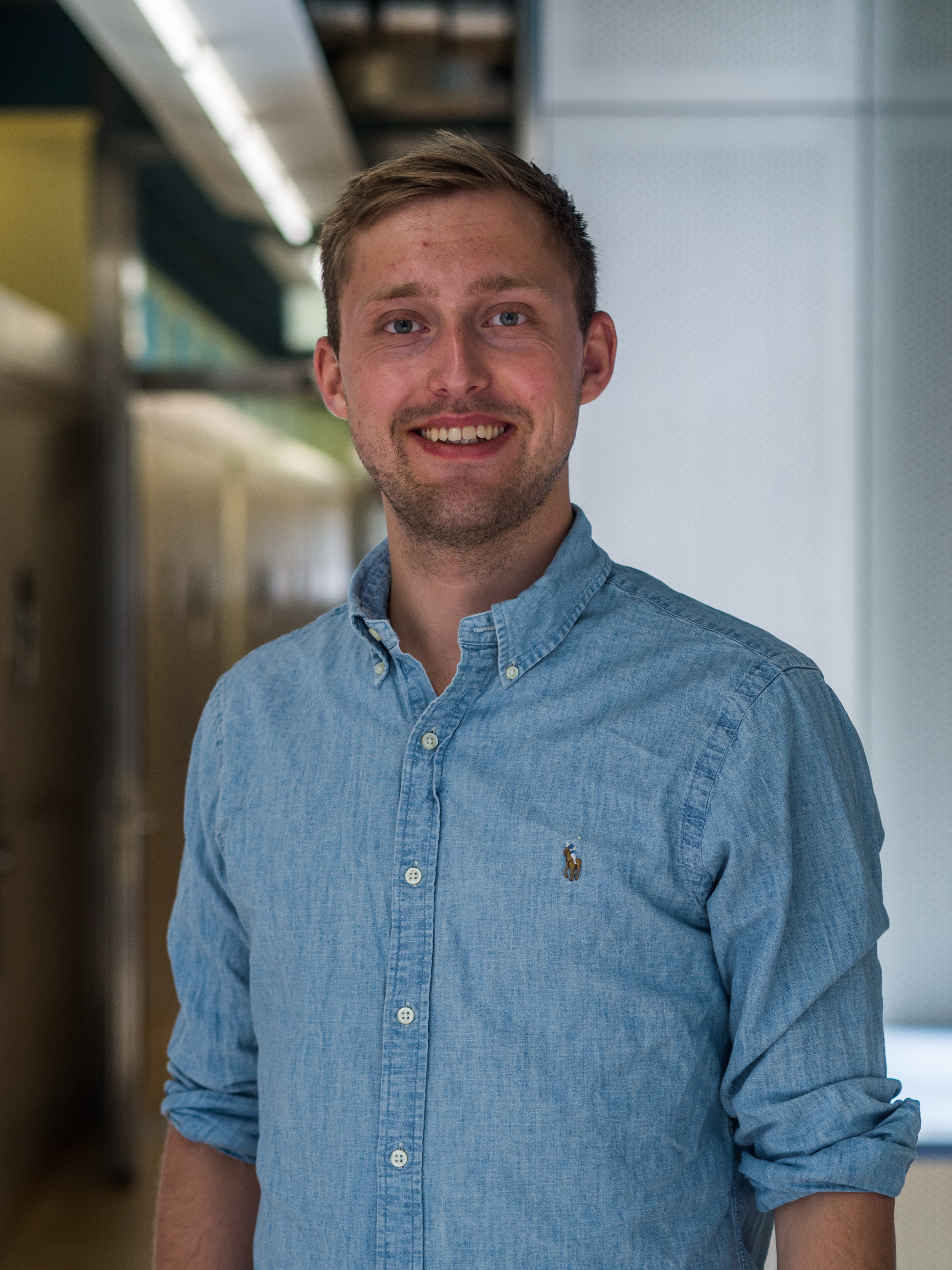
Dr. Claas Ehmke
He built his first robotic system in high school and never looked back. An electronics and embedded expert with deep hands-on hardware and software skills, and a particular affinity for medical tech and autonomous systems.
LinkedIn
Yaohui Huang
He turns advanced models into robust real-world behaviour. Award-winning work in mechatronics and soft robotics, paired with analytical clarity and a sharp systems perspective on hard problems.
LinkedIn
David Werder
He bridges hardware, sensing, and reliable implementation into compact, robust systems — a structured, detail-driven engineer who carries concepts all the way to a working prototype.
LinkedIn
Daniel Gisler
Innovation manager at Align Technology, Daniel turns early ideas into testable concepts at speed — reducing uncertainty through experimentation and building the first functional version of complex systems.
LinkedIn
Viacheslav Sydora
He connects analytical depth with hands-on implementation, from learning-based control to robotic systems that make complex algorithms tangible. Research-driven, and practically minded.
LinkedInPhilipp Kopp
A natural leader with entrepreneurial drive and deep-tech expertise in software, computer vision, and machine learning. He co-founded his first deep-tech startup before beginning graduate studies.
LinkedInJasan Zughaibi
An expert in control theory and its applications, with a portfolio of award-winning robotics projects. He researches at ETH's Multi-Scale Robotics Lab and the Max Planck Institute.
LinkedInThree short accounts of proof in practice.
We would always rather show a prototype than describe a process. A few representative snapshots follow — illustrative placeholders, to be replaced with named work.
A stalled sensor question, answered on the bench
A feasibility question that had lingered for months became a tested, working rig — and a clear technical verdict the team could act on.
An ageing product, re-engineered
We modernised the architecture and prototyped a new direction, giving an established product a credible path forward.
A vague brief, turned into a decision
We sharpened a loose ambition into a focused challenge and shipped a working demo that finally unblocked the call.
Some challenges simply refuse to fit the roadmap they were given.
They stall inside ordinary process. They do not need another workshop or another wall of sticky notes — they need a team willing to move quickly, think technically, and put something real on the table. These are the moments we were built for.
The idea without a route
The ambition is clear, but the path from concept to something that genuinely works is not.
The product losing its edge
It is slipping while rivals advance, and what it needs is reinvention — not another round of patches.
The team at capacity
Your people are excellent and entirely booked. The new challenge has nowhere to land.
The question kept for later
"Is this even feasible?" keeps sliding to next quarter, and the decision stays quietly frozen.
Bring us the challenge your team can't stop thinking about.
Tell us where you are stuck — or where you would like to go. We will tell you, quickly and honestly, what is possible and how we would build it.